
I propose that the pictorial inscription on the Arkalochori Axe depicts an early form of the Demeter and Erysichthon sacred-tree narrative. Read as a sequence of images rather than as abstract characters, the inscription presents a remarkably coherent progression.
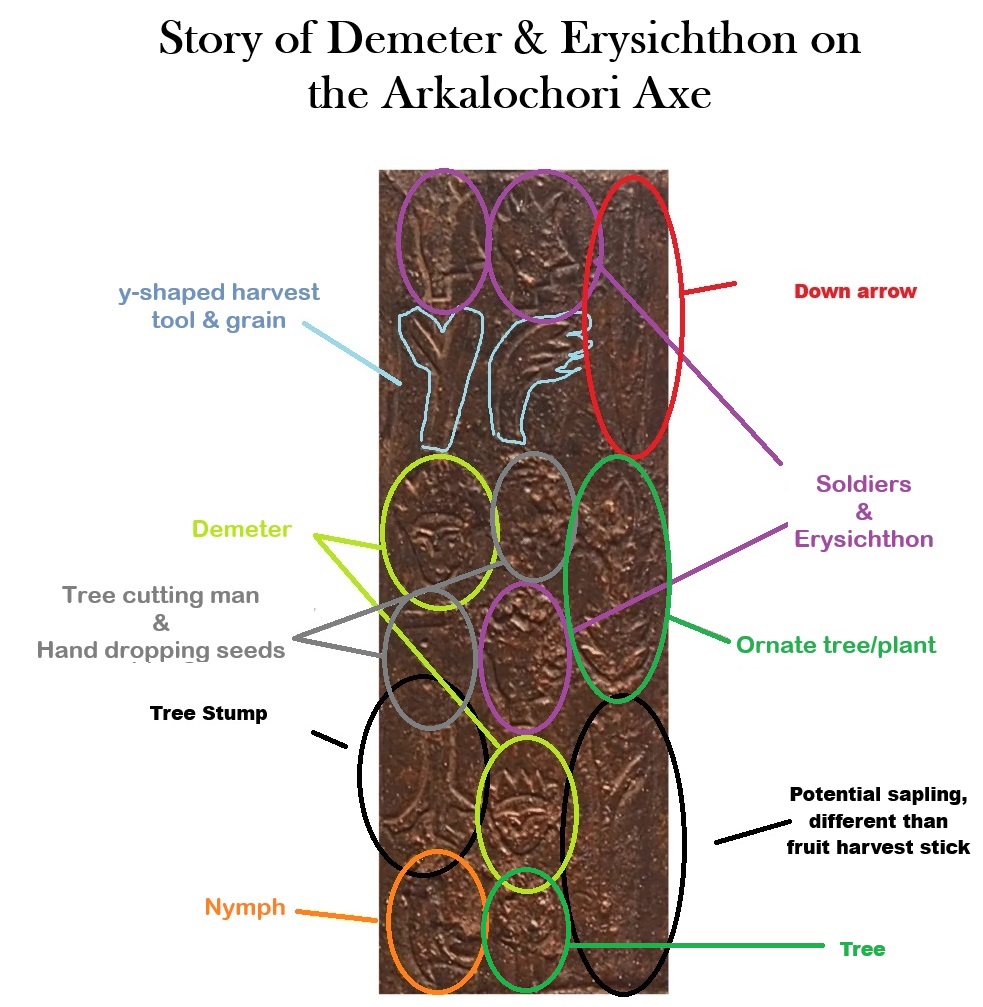
Two crested Carians (later translated into myth as Thalassian soldiers) indicate increased growth of the Carians. Below them there is a forked fruit harvesting implement and grain. An arrow on the top right points downward at an ornate botanical image. To the left, it is inferred that a man cuts a tree and a Carian appears below (likely reimagined as Erysichthon in the later Greek mythology). A distinctive crowned figure occurs twice and is associated with an image of a hand and seeds, strongly suggesting an agricultural identity. I identify this recurring crowned figure as Demeter, the crested protagonist as Erysichthon, and the preceding matching soldier figures as members of his company. The lower portion depicts a tree stump, an unidentifiable animal directly beneath it that I interpret as the tree nymph, followed again by Demeter and an additional tree and a sapling/tree branch image.
The identification is reinforced by both the object and its archaeological context. The narrative is engraved on an axe – the very implement central to the later Erysichthon tradition, in which Erysichthon and his men enter Demeter’s sacred grove and fell her sacred tree. The Arkalochori Axe was itself deposited in the extraordinary Minoan ritual assemblage of Arkalochori Cave alongside numerous votive axes. Most significantly, other inscribed votive axes from the same cave bear the Linear A sequence i-da-ma-te, which has independently been discussed by scholars in connection with Demeter.
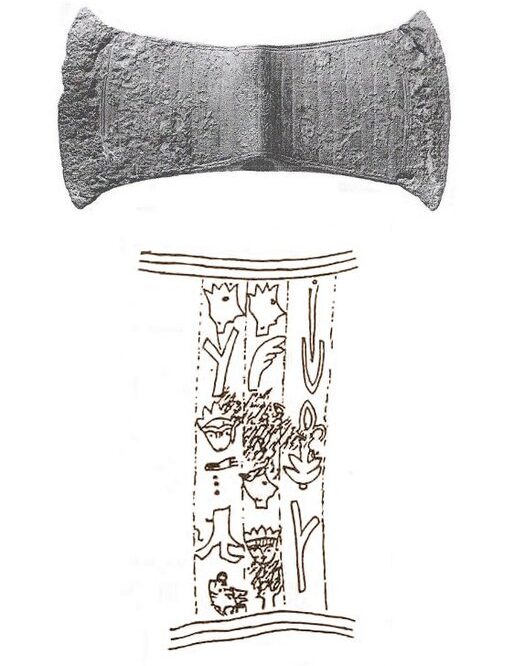
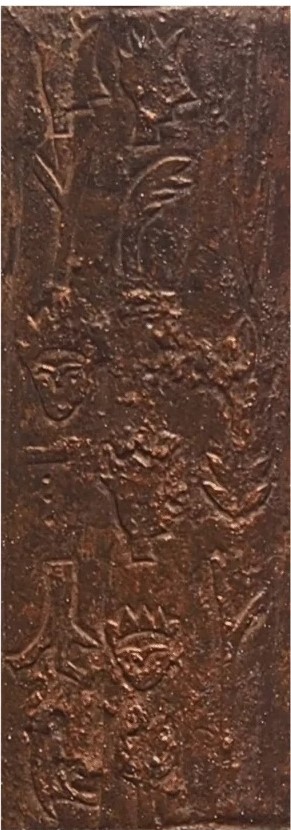
My identification of the agricultural female figure and the Demeter and Erysichthon narrative was determined based on the imagery and mythology alone, before I became aware of the proposed Demeter name connection. Considered together – the harvesting and grain imagery, repeated seed-bearing female figure, crested men, felled tree, unknown animal figure, tree imagery, choice of an axe as the medium, and the independent i-da-ma-te evidence from the same ritual deposit – I propose that the Arkalochori inscription preserves a Bronze Age Cretan representation of the mythological tradition later recorded as the story of Demeter and Erysichthon. – The author would like to note that the term “Thalassian” (means “of the sea” or “marine” in Greek). This is most likely why the term was applied to the transformed Carians (later a maritime society) in the mythology. This was determined via the reading of the Phaistos Disc and Greek history.