
Translations by Donna Evans
The Phaistos Disc – Side 1 (Side B)
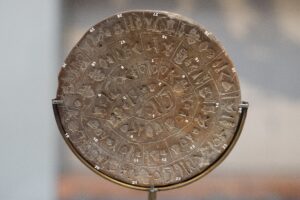
Side 1 of the Phaistos Disc records the early expansion of agriculture, human settlement growth, and the environmental consequences that followed. In the disc, Demeter and Triptolemus are associated with the spread of cultivation and the olive tree, while growing settlements increasingly compete with wildlife for land and food. Meanwhile, the growing impact of the water-based Carians sets the stage for the larger conflicts that develop on Side 2.
The Phaistos Disc – Side 2 (Side A)
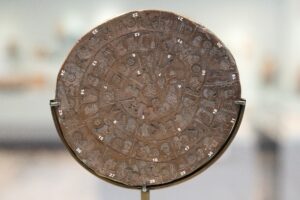
Side 2 continues Triptolemus’s journey as the Carians expand production and place increasing pressure on natural resources. As environmental knowledge and agricultural spreads, this record documents the struggle to balance growing civilizations with resource limits, finally ending with Triptolemus journeying into direct conflict with the water-based Carians (a conflict that likely continues on another disc yet to be found).
The Arkalochori Axe
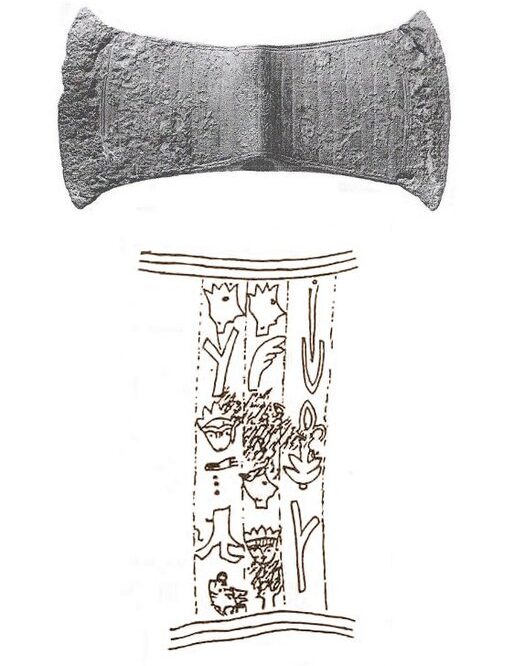
The Arkalochori Axe inscription appears to preserve an early Cretan version of the Demeter and Erysichthon myth. Its imagery forms a coherent narrative sequence involving soldiers, grain, a recurring god-like female figure associated with a seed-planting hand, a tree stump, and the tree nymph figure.
Neapolis 8-sided Seal
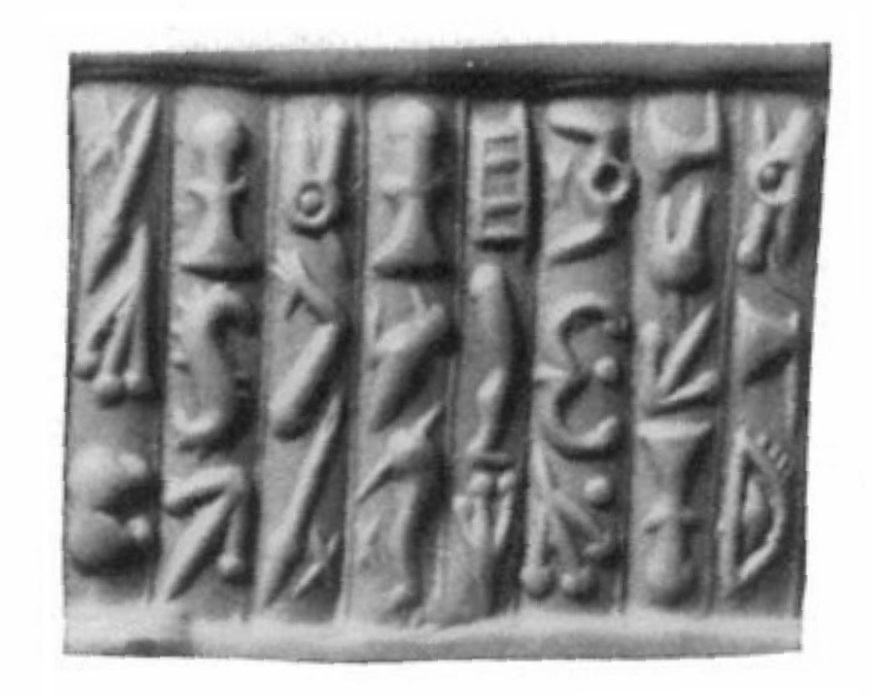
The eight-sided Neapolis seal appears to have been created as a public-sign maker, with each face producing a separate warning or instruction. The signs address practical concerns such as protecting nursing animals and animals with young, and avoiding harm to dogs. Others are warnings connected with plant gathering.